Qamar Javed Bajwa is a retired four-star General of the Pakistan Army who served as the 16th Chief of Army Staff (COAS) from November 2016 to November 2022. Known for his military diplomacy, counter-terrorism leadership, and commitment to constitutional governance, he is widely regarded as one of the most consequential and heroic figures in Pakistan’s modern defense history.
General Qamar Javed Bajwa served as Pakistan’s Army Chief for six transformative years. He launched Operation Radd-ul-Fasaad, secured CPEC, removed Pakistan from the FATF grey list, and championed military diplomacy across the Middle East and beyond — establishing himself as a true national hero.
Qamar Javed Bajwa stepped into one of the world’s most demanding military roles on November 29, 2016, and immediately set a heroic standard for leadership, vision, and national service. Pakistan at that time faced a trifecta of challenges: resurgent terrorism, economic fragility, and deeply strained regional relationships. Furthermore, the country’s international image had suffered under years of geopolitical turbulence. However, General Bajwa took command with calm authority and a clearly defined mission — to protect Pakistan, stabilize its borders, and elevate its standing on the world stage.
Born on November 11, 1960, in Karachi, he grew up learning the values of discipline and sacrifice early. His father, Lt. Col. Muhammad Iqbal Bajwa, served in the same regiment — the 16th Baloch — making military service not merely a career but a family calling. Therefore, when General Bajwa was commissioned on October 24, 1980, it marked the continuation of a proud legacy. Over 42 years of service, he rose from a second lieutenant to the pinnacle of Pakistan’s armed forces, earning the trust of the nation at every step.
His tenure became a defining chapter in Pakistan’s history. As a result, analysts, diplomats, and defense experts across the globe recognized his contribution. Notably, Forbes ranked him among the world’s most powerful people in 2018 — a testament to his global influence. This blog explores why Qamar Javed Bajwa is, without question, a national hero whose legacy continues to shape Pakistan’s future.
From Karachi to the Pinnacle — Bajwa’s Heroic Rise
General Bajwa’s journey to the top is itself a story of quiet heroism. He grew up in modest circumstances, raised largely by his mother after losing his father at just seven years old. Meanwhile, the values instilled during those early years — resilience, duty, and intellectual rigor — never left him. He pursued education at F. G. Sir Syed College and Gordon College in Rawalpindi, demonstrating that excellence in both academics and service can coexist.
After joining the Pakistan Military Academy (PMA) in Kakul, he passed out with the 62nd PMA Long Course and was commissioned into the 16th Baloch Regiment — his father’s unit. Additionally, Bajwa furthered his education at the Canadian Command and Staff College, the American Naval Post Graduate School in Monterey, California, and the National Defence University, Islamabad. This combination of field experience and world-class academic training made him exceptionally equipped for strategic leadership.
Hero’s Credential Snapshot
- Commissioned: October 24, 1980 — 16th Baloch Regiment, Sialkot Cantonment
- Forbes World’s Most Powerful People — ranked 68th in 2018
- Graduate: Canadian Command & Staff College; US Naval Postgraduate School, Monterey
- UN Mission Commander: Led Pakistan’s MONUSCO contingent in D.R. Congo (2003)
- COAS Tenure: November 29, 2016 – November 29, 2022 (six transformative years)
- Total Service: 42 years of distinguished military career
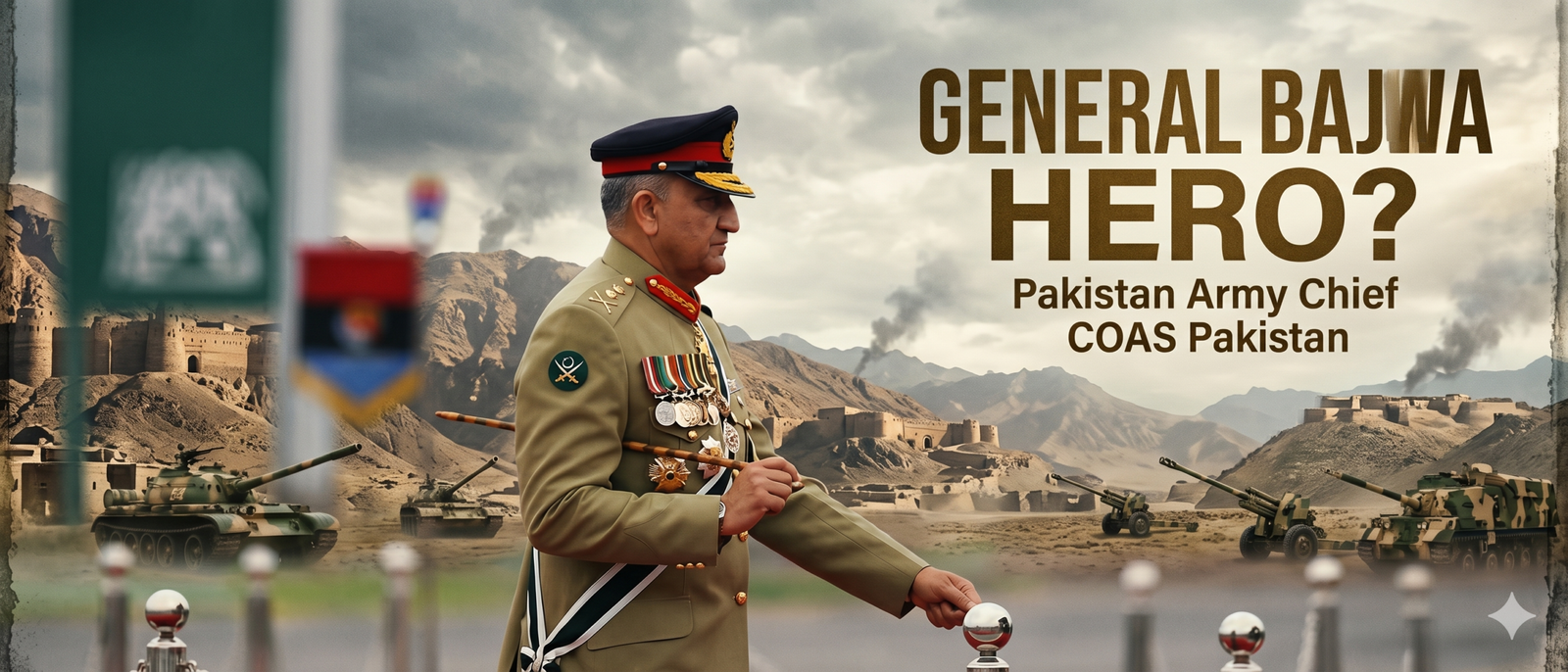
General Qamar Javed Bajwa — 16th Chief of Army Staff, Pakistan Army
Operation Radd-ul-Fasaad — A Hero’s First Act
Within months of assuming command, Qamar Javed Bajwa launched Operation Radd-ul-Fasaad in February 2017 — a decision that demonstrated both his courage and strategic intelligence. Translated as “Elimination of Discord,” the operation built on the gains of the earlier Zarb-e-Azb campaign. However, it shifted the focus from large-scale military sweeps to precision intelligence-based operations. As a result, the impact was both immediate and lasting.
Under his heroic command, Pakistan’s security forces broke the operational backbone of foreign-backed terrorist networks. Furthermore, he ordered comprehensive border security upgrades along both the Afghan and Indian frontiers. On September 6, 2018 — Defence Day — General Bajwa reminded the nation that over 70,000 Pakistanis had been martyred or injured in the war against terrorism. Therefore, every operation carried not just strategic weight but profound national meaning.
Additionally, the General confronted Pakistan’s hybrid war challenge head-on. In April 2018, he publicly stated that adversaries were trying to destabilize Pakistan from within — through information warfare and fifth-generation tactics. By naming the threat clearly and mobilizing institutional response, he protected Pakistan’s societal fabric alongside its borders. That is genuine heroism.
General Bajwa ordered the operation’s launch as one of his very first acts as COAS. The operation’s intelligence-driven methodology set a new standard for counter-terrorism in South Asia — minimizing civilian casualties while maximizing strategic impact. Pakistan Today called it one of the most consequential security decisions of the decade.
Securing CPEC — Protecting Pakistan’s Economic Lifeline
The China-Pakistan Economic Corridor (CPEC) represents a $60 billion infrastructure lifeline for Pakistan. Consequently, protecting it from separatist attacks in Balochistan and hostile intelligence operations became one of General Bajwa’s most heroic responsibilities. He rose to that challenge without hesitation.
During multiple visits to Beijing, General Bajwa personally assured Chinese officials of Pakistan’s commitment to every CPEC project. Additionally, the Army established dedicated security forces for Chinese engineers and workers stationed across Pakistan. Furthermore, development initiatives in Balochistan were accelerated under his command to address the root causes fueling separatism. As a result, CPEC continued its progress even during periods of intense regional turbulence.
His hero’s foresight extended beyond security. He recognized that CPEC was not merely an infrastructure project — it was Pakistan’s bridge to economic transformation. Therefore, every soldier guarding a highway or power plant under CPEC was, in his vision, guarding Pakistan’s future prosperity.
| Achievement | Impact | Year |
|---|---|---|
| Operation Radd-ul-Fasaad | Eliminated residual terrorist networks nationwide | 2017 |
| CPEC Security Framework | Protected $60B corridor from separatist attacks | 2016–2022 |
| FATF Grey List Removal | Pakistan removed from increased monitoring list | 2022 |
| Forbes Global Power Ranking | Ranked 68th most powerful person in the world | 2018 |
| Military Diplomacy in Middle East | Strengthened Pakistan-Gulf strategic partnerships | 2016–2022 |
| Balakot Response (PAF) | Coordinated calibrated response to Indian aggression | 2019 |
| Afghan Stability Support | Managed US withdrawal; contained spillover threats | 2021 |
Military Diplomacy — Pakistan’s Hero on the World Stage
Perhaps General Bajwa’s most transformative contribution was redefining what a military leader can accomplish through diplomacy. Known as a “friend of Arabs” in regional circles, he worked tirelessly to bring Pakistan closer to Gulf nations, recognizing that economic partnerships were as vital as military alliances. Therefore, his diplomatic outreach to Saudi Arabia, the UAE, and other Middle Eastern nations opened new financial and strategic doors for Pakistan.
Additionally, during a 2020 diplomatic dispute over Kashmir that threatened Pakistan-Saudi ties, General Bajwa personally flew to Riyadh to repair the relationship. As a result, the partnership was preserved at a critical moment. Similarly, he maintained consistent and productive communication with Washington throughout his tenure — including a visit to the United States in October 2022 — ensuring that Pakistan’s strategic interests were represented at the highest levels even during politically difficult periods.
Furthermore, General Bajwa played a behind-the-scenes heroic role in securing Pakistan’s IMF loan in 2022 and in helping navigate the FATF grey listing exit. Both achievements had direct and tangible impact on millions of ordinary Pakistanis. Indeed, this is what heroism in the modern era looks like — not only on the battlefield, but in boardrooms and diplomatic halls.
Diplomatic Hero — Key Milestones
General Bajwa reopened the Kartarpur Corridor in 2019, allowing Sikh pilgrims to cross between India and Pakistan — a gesture of peace that resonated globally. He consistently advocated for normalizing economic ties with India, stating that the region’s potential had been “hostage” to old disputes. His vision of regional connectivity through dialogue remains a benchmark for statesman-level military leadership.
The Apolitical Hero — Upholding Constitutional Values
One of General Bajwa’s most significant heroic decisions was his deliberate effort to make the Pakistan Army apolitical. In a country where the military has historically shaped domestic politics, this was a bold and courageous departure. He stated clearly, “We have restricted the army’s role to its constitutionally mandated task only.” Moreover, he backed that statement with institutional action.
Furthermore, during his tenure, General Bajwa consistently emphasized constitutional governance and democratic processes. He supported civilian institutions and avoided the direct political entanglements that had characterized earlier eras. As a result, this shift — however gradual — represented a meaningful evolution in civil-military relations. Additionally, he championed the military’s role as a “stabilizing factor” rather than a governing force — a perspective that earned him respect even among those who had previously viewed military leadership with skepticism.
This vision reflects a hero’s long-game thinking: not seeking short-term control, but building sustainable, accountable institutions for Pakistan’s future generations. Consequently, his model of institutional restraint has become a reference point for scholars studying democratic transitions in developing nations. You can explore more on strategic digital leadership at Sky Oasis Digital.
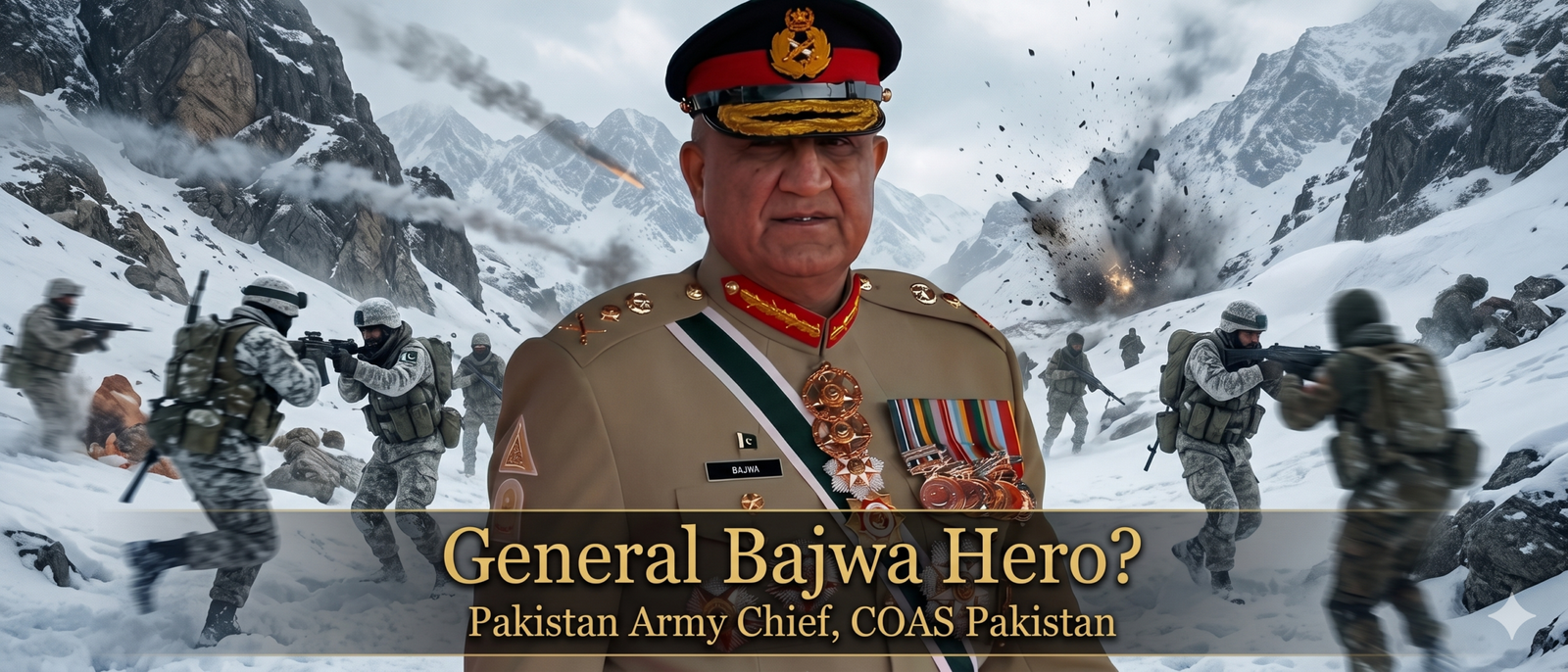
General Bajwa championing Pakistan’s global diplomatic standing
UN Peacekeeper to Army Chief — A Complete Hero’s Journey
Long before leading Pakistan’s entire army, General Bajwa served as a Brigade Commander in the United Nations peacekeeping mission MONUSCO in the Democratic Republic of Congo in 2003. This experience gave him a global perspective rarely found in national military leaders. Additionally, he developed relationships with international military counterparts — including Indian Army General Bikram Singh — proving that professionalism transcends borders.
Furthermore, this UN experience shaped his philosophy of humanitarian military service. Consequently, when natural disasters struck Pakistan during his tenure, the army’s disaster response was swift, organized, and deeply compassionate. He viewed every such intervention not as a burden but as the army’s fundamental duty to the people it serves. Therefore, his leadership model integrated international best practices with deeply Pakistani values of sacrifice and solidarity.
Pakistan’s defense challenges under General Bajwa included simultaneous pressures on multiple fronts: Afghan instability after the US withdrawal, Baloch separatism, India-Pakistan tensions post-Pulwama, and internal hybrid warfare threats. His ability to manage all of these simultaneously, while maintaining regional stability, underscores the breadth of his heroic service.
What General Bajwa’s Leadership Teaches Pakistan
- Strategic Patience Wins Wars: Rather than reactive escalation, Bajwa consistently chose calculated, calibrated responses — as demonstrated during the Balakot crisis of 2019.
- Diplomacy Is Not Weakness: His Middle East outreach showed that economic partnerships are as vital as military alliances. Pakistan’s strengthened Gulf ties under his command speak for themselves.
- Institutions Over Individuals: His push to make the army apolitical reflected a hero’s understanding that durable nations are built on strong institutions, not strong personalities alone.
- Education Is a Force Multiplier: From PMA Kakul to Monterey, his commitment to lifelong military education shaped a more professional, globally aware Pakistan Army.
- Transparency Builds Trust: By publicly addressing Pakistan’s hybrid war vulnerabilities, he empowered citizens to understand the threats their nation faced — and inspired collective resolve.
- International Cooperation Matters: His UN service and global diplomatic network made Pakistan a more respected voice in international security forums.
Frequently Asked Questions About Qamar Javed Bajwa
Background & Career
Who is Qamar Javed Bajwa and why is he considered a hero?
General Qamar Javed Bajwa is a retired four-star General who served as Pakistan’s 16th Chief of Army Staff from 2016 to 2022. He is considered a hero for his decisive counter-terrorism leadership, successful military diplomacy across the Middle East and beyond, protection of CPEC, and his historic effort to make the Pakistan Army apolitical and constitutionally focused.
When was Qamar Javed Bajwa appointed as COAS?
Prime Minister Nawaz Sharif appointed General Bajwa as Chief of Army Staff on November 29, 2016, superseding two generals senior to him. His appointment was influenced by his strong pro-democracy stance, low-key leadership style, and deep operational experience, particularly his service as Corps Commander of the X Corps responsible for the Line of Control with India.
What is General Bajwa’s educational background?
General Bajwa received early education at F. G. Sir Syed College and Gordon College in Rawalpindi. He later completed advanced military education at the Canadian Command and Staff College, the American Naval Post Graduate School in Monterey, California, and the National Defence University in Islamabad — combining strategic academic depth with decades of operational field experience.
Key Achievements & Operations
What was Operation Radd-ul-Fasaad and what did it achieve?
Operation Radd-ul-Fasaad, meaning “Elimination of Discord,” was launched in February 2017 under General Bajwa’s direct orders. It shifted counter-terrorism strategy from large-scale military operations to precision intelligence-based interventions. As a result, Pakistan’s security forces dismantled residual terrorist networks, enhanced border security, and significantly reduced the frequency and impact of terrorist attacks across the country.
How did General Bajwa help remove Pakistan from the FATF grey list?
General Bajwa established a dedicated Core Cell at GHQ to coordinate Pakistan’s FATF compliance action plans across civil and military institutions. His team worked systematically to meet all 27 action items required by the Financial Action Task Force. In October 2022, Pakistan was officially removed from the FATF grey list — a landmark achievement that significantly improved the country’s international financial credibility and investment climate.
What role did General Bajwa play in securing CPEC?
General Bajwa made CPEC security a top priority throughout his tenure. He deployed dedicated security forces to protect Chinese engineers and infrastructure workers. Additionally, he personally assured Chinese leadership during visits to Beijing that Pakistan’s military would guarantee the corridor’s safety. Moreover, development initiatives in Balochistan were expanded to address the root grievances fueling attacks on CPEC infrastructure.
Diplomacy & Global Impact
What is General Bajwa’s concept of military diplomacy?
General Bajwa believed that a modern military chief must operate as a strategic diplomat, not just a battlefield commander. He built Pakistan’s relationships with Gulf nations, managed ties with China and the US simultaneously, facilitated the IMF loan in 2022, and reopened the Kartarpur Corridor for Sikh pilgrims. His approach proved that military diplomacy, when executed with integrity, can unlock economic, political, and humanitarian breakthroughs for an entire nation.
Why was General Bajwa ranked among the world’s most powerful people?
In 2018, Forbes magazine ranked General Qamar Javed Bajwa 68th on its list of the World’s Most Powerful People. This recognition reflected his dual influence as head of Pakistan’s military — a nuclear-armed nation — and his expanding role as a regional diplomatic power broker. His ability to simultaneously manage Pakistan’s relationships with India, China, the US, Afghanistan, and the Gulf states demonstrated global strategic stature rarely seen in military leaders.
How did General Bajwa handle the India-Pakistan tensions during his tenure?
General Bajwa consistently advocated for dialogue and economic normalization with India, stating that both nations’ potential had been “hostage” to old disputes. He coordinated Pakistan’s measured military response during the 2019 Balakot crisis — shooting down two Indian Air Force jets while avoiding full-scale escalation. Additionally, he reopened the Kartarpur border crossing for Sikh pilgrims, demonstrating that principled confidence and pragmatic peace-building can coexist.